


Putting, especially on short ones inside 50 feet, is where many strokes are gained or lost. The difference between three-putting and confidently sinking a par often comes down to subtle habits that few golfers notice. Here are three unconventional putting tips that could change your game on the greens.
Tip 1: Know Your Green-Reading Style — “Line” or “Curve” Vision
Not all golfers read greens the same way. Some see a putt as a straight line from the ball to the hole. Others visualize a gentle curve, imagining where the ball will enter the cup.
- If you’re a “line-oriented” putter, you mentally pick a target point (an “aim spot”) along the straight start-line and stroke directly at it.
- If you’re a “curve-oriented” putter, you focus on the hole instead, often imagining where on the lip or what “clock-face time” the ball will drop in. That gives you a natural sense of the required path and speed.
The key: figure out which approach feels more natural to you. Then stick with it. Trying to force a different style can create hesitation and poor reads.
How this helps
Once you align your brain’s “mode” with your putting style, line, or curve, you'd better trust your reads and stroke. That reduces overthinking, improves confidence, and often leads to more putts holed.
Tip 2: Match Your Stroke to Your Set-Up — Pendulum or Push
Traditional putting advice often emphasizes the “pendulum” stroke, where the backstroke and follow-through are symmetrical and controlled by the shoulders. This works well, but only when your setup allows it.
- If you place the ball in the center of your stance, a pendulum stroke often feels natural and consistent.
- If you position the ball slightly forward in your stance, a more forward-weighted “push” style stroke might work better — shorter backstroke, longer follow-through, with a steadier lead wrist through impact.
Neither stroke is wrong. The important part is to use the stroke style that matches your chosen setup, stance, and ball position. This alignment helps maintain consistency rather than fighting your body's natural tendencies.
Why it matters
When your setup and stroke don’t match, you can create tension. Your body tries to adjust, leading to small errors, particularly on short putts. Matching your stroke to your setup improves stability and smoothness.
Tip 3: Try Putting With One Eye Closed for Short Putts
Here’s a simple yet effective trick that many golfers ignore: for short putts, around 6–10 feet, try closing your lead eye during the stroke.
Why this works: Closing one eye cuts down on visual distractions, such as watching the ball move or worrying about whether it will fall in. This forces you to rely on feel, rhythm, and your pre-stroke read instead of your ego.
You might be surprised at how steady your head feels, how smooth your strokes become, and how you experience fewer “twitches” or slowdowns.
The Underlying Truth: Putting Is As Much Mental & Visual as It Is Physical
Many golfers obsess over stroke mechanics, like grip, alignment, and posture. However, putting is just as much about how your brain interprets the green, visualizes the path, and executes confidently once you've made a decision.
For many amateur golfers, the most significant improvements come not from tweaking their stroke but from aligning their mental reading of the green with their stroke style—and practicing with purpose, rather than going through the motions.
Simple Putting Practice Plan to Try This Week
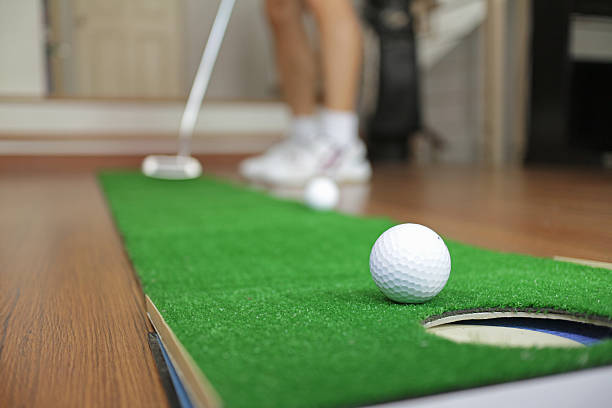
- During your next practice session, alternate between putting with your eyes open and with your lead eye closed, especially for short putts. Observe any differences in feel and consistency.
- Try both ball-in-center and forward-ball setups; experiment with both “pendulum” and “push” strokes to discover which feels natural and repeatable for you.
- Before each putt, decide whether you will “line-aim” or “visualize curve,” then stick to that. Don’t switch mid-putt.
- Use stable gear like a dry towel, or grip-enhancing tools to minimize distractions and keep your focus.